Keeping a reliable ambulance fleet on the road requires more than deciding when to purchase the next new unit. It also means understanding how each vehicle can safely support the department throughout its useful life.
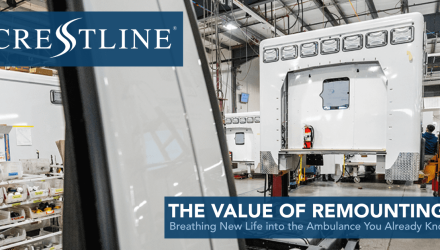
An ambulance remount can be one part of that strategy. When the patient compartment remains serviceable, it may be removed from its existing chassis, thoroughly evaluated, refurbished as needed, and integrated with a compatible new chassis. The completed ambulance must then be inspected, documented, and certified to applicable requirements.
Remounting expert Eric Talley, who manages the Ambulance Remount Center in Elkhart, Indiana, describes remounting as a way to give a proven ambulance module a new service life.
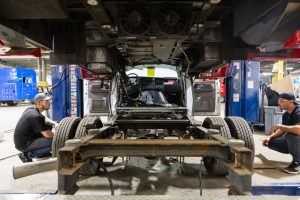
“We give ambulances a new life through repurposing the module,” Talley said. “We refurbish those bodies and reinstall them on a new chassis. The goal is to return a safe, reliable, and compliant ambulance to service while preserving value from the department’s original investment.”
For Talley, the process is an operational decision centered on fleet readiness, safety, quality and compliance. Not every ambulance can be remounted. The decision should begin with the condition of the vehicle, the agency’s operational needs, and a thorough inspection.
Start with the fleet’s needs
Talley begins the conversation with departments by asking why the ambulance is being considered for a remount. A collision-damaged unit may need a new chassis while its module remains relatively current. An older ambulance may require flooring, windows, paint, or technology updates.
“We treat each order as unique, and it always starts with a conversation,” Talley said.
That conversation should include the ambulance’s age, condition, configuration and expected role. A remount can return a unit to service, extend a serviceable module’s life and pair it with a new chassis when the module and chassis are compatible. It may also preserve materials and value already invested in the module. Those benefits only matter, however, if the finished ambulance fits the department’s needs and can perform reliably.
There are many reasons departments choose to remount. A remount may help a department:
- Return an ambulance to service sooner than purchasing a new unit
- Extend the useful life of a proven module
- Replace an aging chassis with a compatible new chassis
- Plan vehicle rotations and capital purchases more predictably
- Update selected systems, features, or interior components
- Provide an economical alternative to purchasing new
No matter the reason, it all starts with Talley’s team learning about the department’s needs and looking over their ambulance to define the scope of the project.
Inspection—not assumptions—defines the work
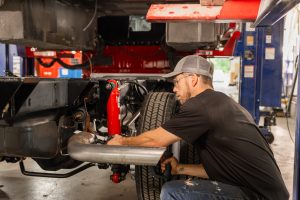
Once an ambulance arrives at the facility, Talley’s team compares the requested work with the vehicle’s actual condition. That intake inspection determines the scope rather than forcing every ambulance into a predetermined package.
“We make recommendations so the customer understands what could be done, what needs to be done, and what should be done,” Talley explained. “It’s not necessarily a complete overhaul in every case.”
Safety systems and critical components cannot simply be transferred without review. Their condition, compatibility and continued suitability must be evaluated as part of the remount process. The review reaches beyond visible wear, covering structure, corrosion, electrical systems, restraints, doors, HVAC, equipment, and lighting. The engineering team reviews the original design, vehicle configuration, and replacement components to support proper fit, system compatibility, and documented performance.

Safety, quality and compliance guide the entire remount
After the module is separated, approved repairs and updates are completed before chassis integration. Structural attachments, electrical interfaces, controls, and onboard systems must work together correctly.
Inspection continues during and after assembly. Depending on the scope, continuous checks may cover structure, electrical systems, compartments, restraints, HVAC, oxygen, doors, and lighting, followed by road testing and a final inspection.
Compliance guides decisions from the beginning, not only at final inspection. Applicable safety standards may evolve over the service life of an ambulance, and each remount must be evaluated based on its configuration, destination and scope of work. Structural integrity, electrical systems, occupant protection, vehicle weight, chassis compatibility and required documentation all influence whether and how the vehicle can be safely remounted and certified. Talley connects that rigor directly to the ambulance’s lifesaving mission.
Plan for timing and know when to replace
How fast an ambulance is remounted depends on the module’s condition, approved scope, production scheduling, and chassis and parts availability. At the Ambulance Remount Center in Elkhart, Talley said a full remount is typically completed in 90 days or less once the vehicle enters production. Every project differs, and the total timeline may be longer.
Planning early helps departments prepare for downtime and coordinate remounts with new purchases. Talley said a credible provider should also explain when damage, corrosion, obsolete technology, compliance challenges or changed needs make replacement the better path. He noted that a provider should be willing to recommend replacement when the condition of the unit or the department’s needs make remounting impractical.
Factors that may affect the decision include:
- Significant structural damage or excessive corrosion
- Safety concerns that cannot be adequately resolved through the remount process
- Vehicle age and overall module condition
- Obsolete systems or technology
- Extensive changes needed to meet applicable requirements
- A new chassis that is not a suitable match for the module
- Operational needs that have outgrown the current configuration
- A fleet strategy that favors full replacement
There is no single age or mileage that determines whether every ambulance qualifies. A newer collision-damaged unit may need a very different scope than an older ambulance with years of frontline service. Each vehicle should be evaluated on its own merits.
Before selecting a provider, departments should ask how inspection, engineering review, chassis compatibility, applicable standards, certification, testing, documentation and warranty support are handled. They should also understand who assumes responsibility for the completed vehicle and whether the provider can support it after it returns to service.
“Some of the folks here have been doing ambulance work for over 30 years. We are very fortunate to have a deep knowledge base, and there is a great sense of pride here,” said Talley of his team at the Ambulance Remount Center. “It’s not a question of ‘if’ the ambulance might save lives; it definitely will. So, we will not let a truck go back if it’s not correct. You want a provider who can stand behind their product 100 percent. Each person here is willing to raise a hand when something isn’t right.”
Make remounting part of long-term fleet planning
Remounting works best when it is considered before a fleet reaches a crisis point. Maintenance history, replacement schedules, expected call volume, vehicle rotations, and capital plans can all help a department decide which units may be candidates and when to begin the conversation.
The central question is not simply, “Can this ambulance be remounted?” It is, “Can this ambulance be properly evaluated, remounted, and certified in a way that supports a safe, reliable, and ready fleet?”
When the answer is yes, a well-planned remount can give a proven ambulance module another service life while supporting the department’s immediate operational needs and long-term fleet goals.
Connect with the Experts
The Ambulance Remount Center currently remounts Demers, Braun, Crestline, and Medix ambulances. To discuss your fleet’s needs or learn more about the remount process and services available through the Ambulance Remount Center in Elkhart, Indiana, visit theambulanceremountcenter.com.