|
| 
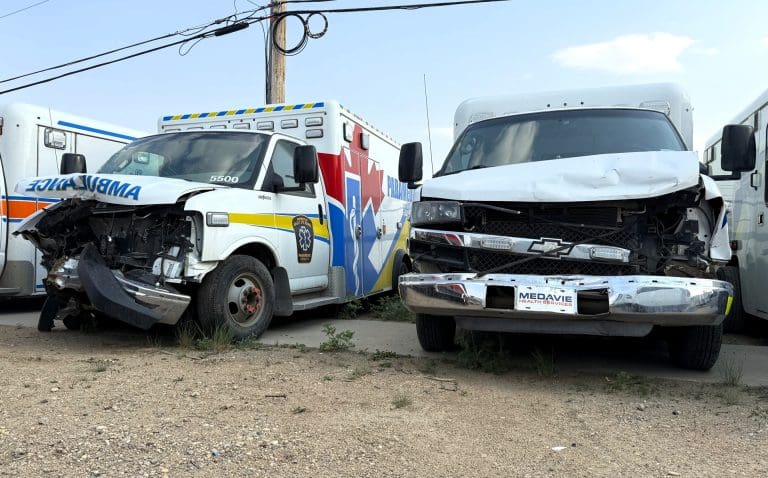
When an ambulance is involved in an accident, the impact reaches far beyond the damaged vehicle. For a fleet manager, two questions quickly take priority: Can it remain safely in service, and how can it return to full operation? Every unit taken off the road adds pressure to the fleet, and to the paramedic service behind it.
That is why Crestline Customer Care recommends calling as soon as possible. Before deciding where or how to repair the vehicle, the team first helps determine what actually needs to be done.
“My first advice to a fleet manager is to call us as soon as an accident happens. By getting involved early, we can help them understand the situation and guide them through the next steps.”
— Robin Giard, Service and Customer Experience Manager
An ambulance requires a different kind of assessment
Photos of the damage, along with the vehicle serial number and mileage, provide a useful starting point. Customer Care can then determine whether an inspection is needed, identify likely parts, and coordinate with the insurer.
Yet an ambulance assessment is rarely limited to what can be seen at first glance.
A strike to a module wall may affect structural elements, cabinetry, or electrical components beneath the surface, which is why knowledge of the ambulance’s original design matters.
“The expertise is also knowing what could be behind the area where the vehicle was hit. Some damage is obvious; other damage only becomes visible during disassembly. You need to know what to look for and make sure nothing is overlooked.”
— Robin Giard
If a repair affects the structure, it must follow the original plans, manufacturing methods, standards, and certifications. The goal is to restore the ambulance in keeping with its intended design and use, to protect the paramedics and patients who rely on it.
Choosing the right path for the vehicle and the service
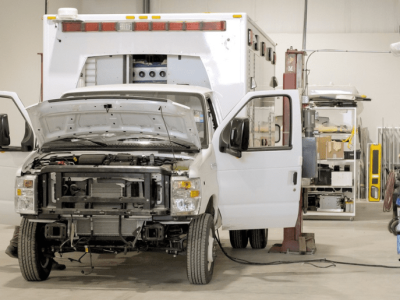
There is no one-size-fits-all answer. A repair may be enough. If the chassis is significantly damaged but the patient module remains viable, an ambulance remount may be the better option. In other cases, age, condition, or damage may point to replacement. If the vehicle is a total loss and operations are strained, Customer Care can work across teams to explore available options, including whether production planning could accelerate a replacement. Our role is to help the fleet manager weigh the options and choose a path that fits both the ambulance and the service’s operations.
An accident does not always mean the ambulance must stay out of service until every repair is complete.
“When the situation allows it, we look for a solution that avoids taking the vehicle off the road unnecessarily. If we can prepare what we need before bringing it in for service, that’s a concrete way to reduce the impact on the customer’s operations.”
— Robin Giard
We want to offer that flexibility to paramedic service, because keeping one more ambulance available (when it can be done safely) eases pressure on the rest of the fleet.
Crestline’s role does not end when an ambulance leaves the production line, or even when a repair is complete. Customer Care helps translate damage into practical choices, balancing vehicle safety with the service’s day-to-day reality.
The right solution does not always mean bringing the ambulance to a Crestline service centre. If the damage does not affect the structure or warranty-related components, Customer Care may recommend a qualified local repair. The priority is the solution that best supports the paramedic service, its crews and the patients they serve.
After an accident, the best first step is simple: contact Customer Care early. The sooner the team understands the situation, the sooner it can chart the safest, most practical path forward and limit the impact on your fleet and operations.