|
| 
Behind every parts request is one goal: identify the right part quickly, among more than 110,000 references, avoid costly mistakes, and help keep your ambulances in service.
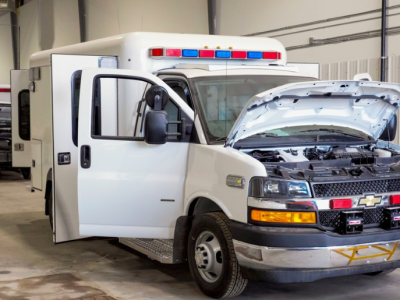
A cracked fender. A damaged scene light. A missing HVAC component. For fleet, maintenance, and operations teams, a replacement part can make the difference between an ambulance that is ready to respond and one out of service.
The moment a request arrives through the online form or at parts@crestlinecoach.com, it is assessed around one simple question: Can this ambulance continue responding to calls?
"A broken rear door handle, for example, can take an ambulance out of service because it blocks access to the patient compartment. A cracked cabinet window, on the other hand, may be able to wait. The real question is always: Can paramedics continue providing patient care safely?"
— Josianne Véronneau, Parts Supervisor at the Eastern Service Centre
That first assessment guides the request toward the solution that will best limit the operational impact.
The right information: the fast track
When every hour counts, a precise request speeds up processing.
"Help us help you. The more information we receive upfront, the less back-and-forth there is, and the sooner the parts can be on their way."
— Éric Gauthier, Parts Technician
A cracked fender. A damaged scene light. A missing HVAC component. For fleet, maintenance, and operations teams, a replacement part can make the difference between an ambulance that is ready to respond and one out of service.
The moment a request arrives through the online form or at parts@demers-ambulances.com, it is assessed around one simple question: Can this ambulance continue responding to calls?
"A broken rear door handle, for example, can take an ambulance out of service because it blocks access to the patient compartment. A cracked cabinet window, on the other hand, may be able to wait. The real question is always: Can paramedics continue providing patient care safely?"
— Josianne Véronneau, Parts Supervisor at the Eastern Service Centre
That first assessment guides the request toward the solution that will best limit the operational impact.
Five details that can speed up processing
- Vehicle VIN and fleet/unit number (shown on the label inside the driver-side door)
- A brief description of the issue
- Clear photos
- Quantity required
- Purchase Order number (if applicable)
What our team checks before shipping
Parts requests are handled by six specialists across our Canadian network. When the information is complete, preparation can begin right away.
Some requests are straightforward. Others require more research because a component has changed over time, several versions exist, or a vehicle was built with a custom configuration. Our team processes dozens of orders every day.
Terminology can also vary from one EMS service to another. When a customer asks for a “siren,” do they mean the speaker or the electronic control module?
"If there's any doubt, we pick up the phone and call the customer."
— Éric Gauthier
This validation confirms the correct reference, whether it is an original ambulance part or an integrated component. It helps preserve the vehicle’s safety, performance, and durability.
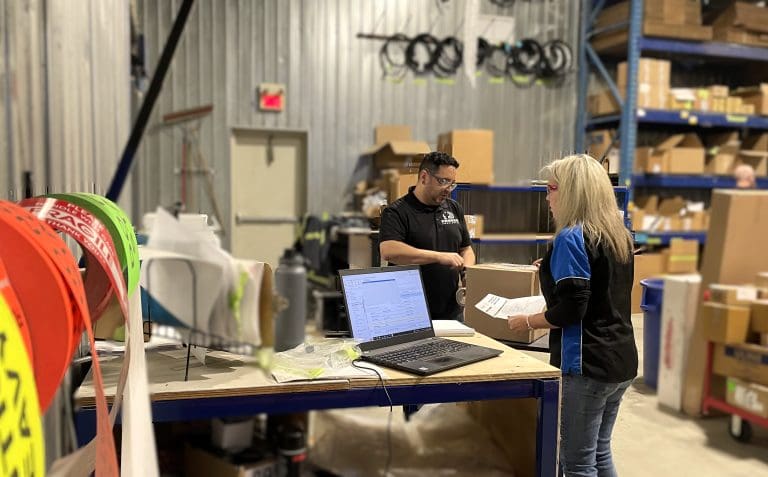
Once the checks are complete, the order moves to the warehouse. Parts are picked, packed, weighed, and prepared for shipment. If everything is in stock and the request arrives before mid-afternoon, it can often ship the same day.
Well-managed inventory and alternatives
For critical parts, the team works to reduce the risk of stockouts.
"We look at our history. If a part comes up often and it can take a vehicle out of service, we adjust our inventory levels to reduce the risk of running out."
— Josianne Véronneau
Whenever possible, the team also looks beyond a single inventory. If a component is shared by Demers and Crestline vehicles, specialists check the options available across the network.
"If a part isn’t available on one side, we look to see whether we have an equivalent on the other. The goal is to help the customer, not simply to manage one inventory. Giving a lead time that makes no sense is not part of our language. We try many other options before we get to that point"
— Josianne Véronneau
By the time a part leaves the warehouse, much of the work has already been done: prioritizing the request, validating the information, finding the correct vehicle configuration, and confirming the component.
For EMS professionals, it’s this invisible work that often makes the difference between a routine parts order and getting an ambulance safely back on the road quickly.