|
| 
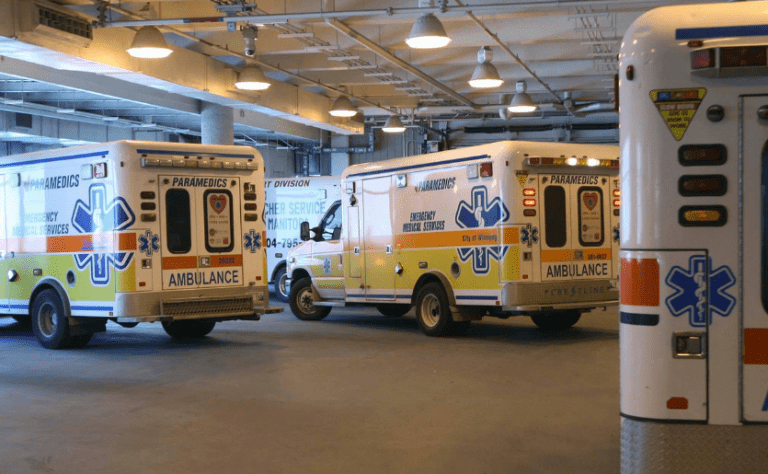
When you are responsible for keeping hundreds of ambulances road-ready across an entire province, efficient diagnostics and repairs are operationally critical.
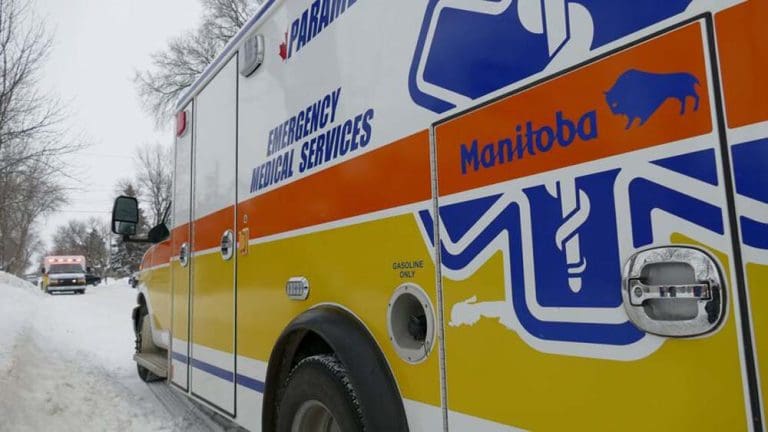
In Manitoba, more than 200 Crestline ambulances are on the road, in urban centres, rural communities, and remote regions. Supporting that fleet is a small, highly skilled maintenance team led by Chris Monchamp, Mechanical Shop Supervisor (MSR) for Fleet Management Services.
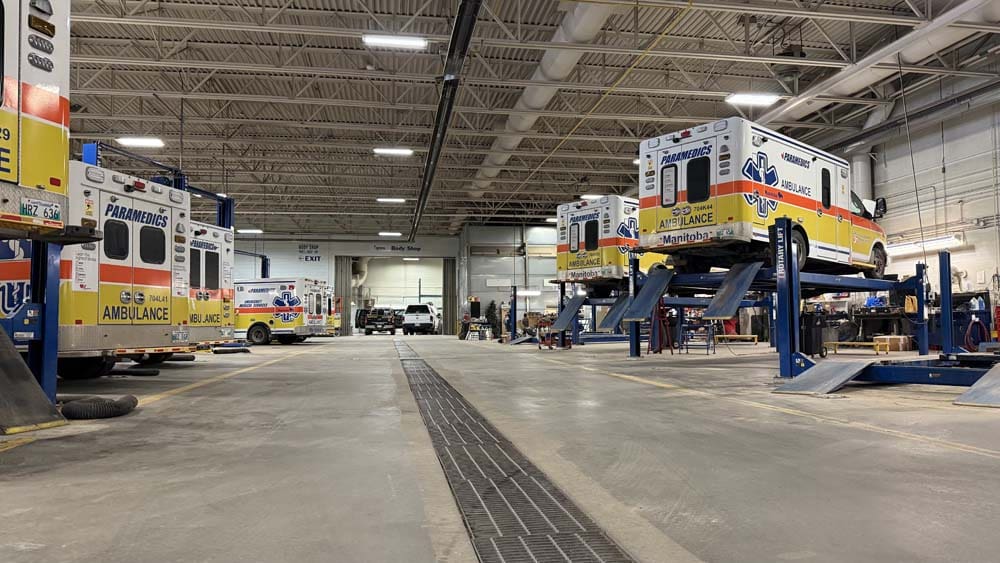
The FMS central shop supports Winnipeg and surrounding area units with handling complex issues.
“We don’t have time to start Googling repairs. Any one of those units could be coming in at any time.”
Chris Monchamp
When Crestline initiated the multiplex transition of its core multiplex system to the MMC electrical control platform as part of its product evolution, it marked a significant change for long-standing customers like Manitoba.
For any fleet, any system transition can create operational risk if proper support is not in place. That’s where OEM training makes the difference.
Transitioning multiplex systems: managing risk
Like many EMS fleets across Canada, Manitoba had long experience with its previous electrical control system. The team understood it and had built processes around it. In an ambulance, the multiplex system is the backbone that powers and coordinates critical functions throughout the module, from lighting and climate control to scene operations. It is an essential component. So, when the transition to the MMC system was announced, hesitation was natural.
“I honestly thought it was going to be super hard to learn. We’re used to the other system. I thought, now we have to know two different systems.”
Chris Monchamp
The transition meant the team needed a clear, structured introduction to the new platform. Trial‑and‑error wasn’t an option. From the outset, the team was clear: “We said, if we have a new system, someone has to show us how this works and how to diagnose stuff.”
A training built into the tender
For Aries Lee Marcial-Aswit, Ambulance Coordinator for Manitoba’s Fleet Management Services, their team had to be prepared. “It’s a system that we’ve never had before,” she explains. “We wanted to have that training and understand best practices and troubleshoot in case something doesn’t work.”
Including OEM training in the procurement process was a deliberate decision. “Hands-on experience is crucial because it’s a frontline vehicle,” Aries says. “I can’t say, ‘Yeah, we’ll wait two weeks until we can get a hold of somebody.’”
In a province where 80% of the geography is rural, and support is not always immediate, autonomy matters.

Training that builds confidence
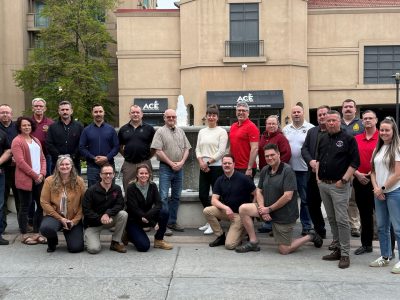
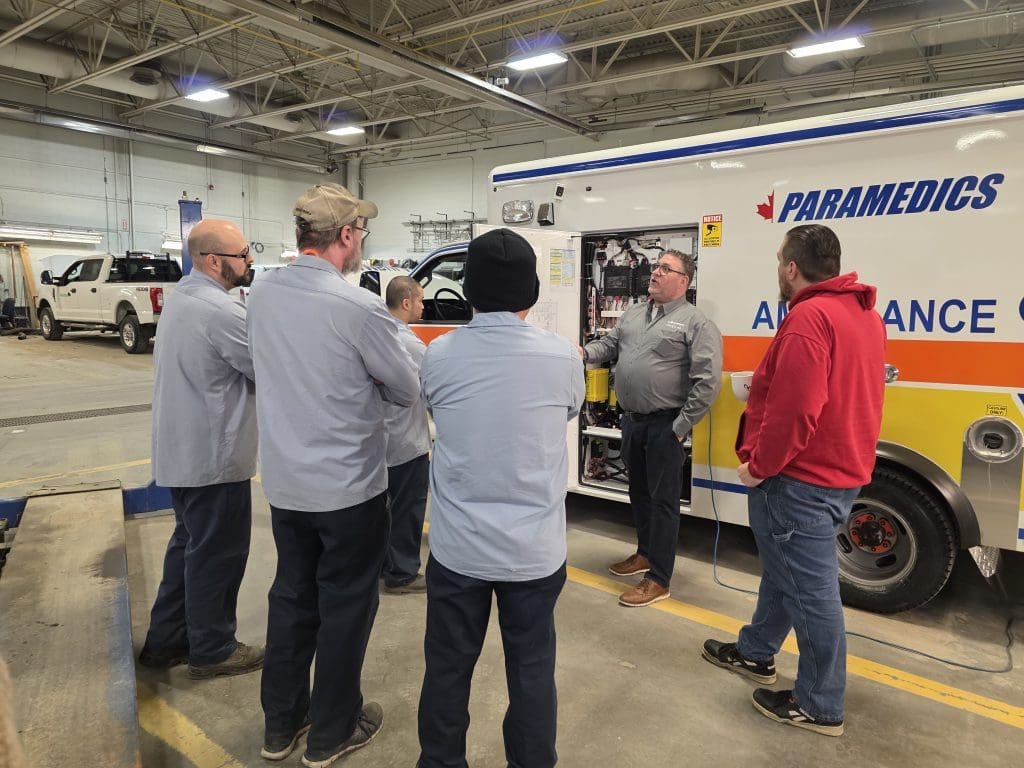
When the five MMC-equipped units were delivered, a structured OEM training session was held. It began with a full-system walkthrough using a demonstration board replicating the MMC system, followed by a hands-on review inside an ambulance.
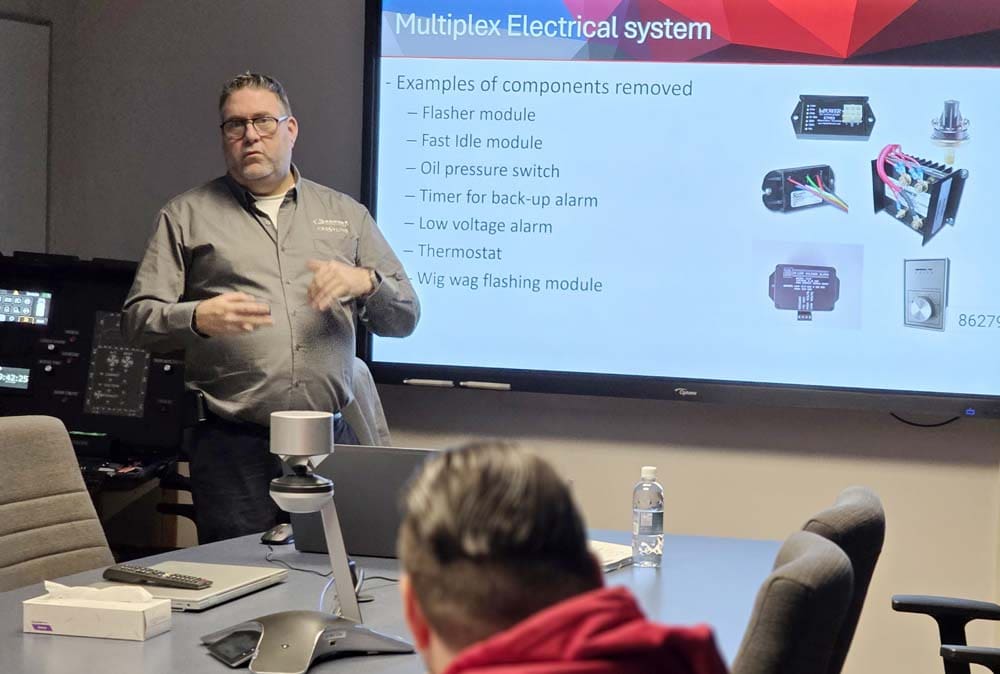
For Chris, who came from a heavy-duty mechanical background and had never personally operated the ambulance module controls, the clarity was immediate.
“His knowledge was top-notch. Very clear, precise demonstration. For me, the demonstration board was awesome to see… and he made it very easy.”
Chris Monchamp
The instructor translated system architecture into practical troubleshooting steps, removing the intimidation factor. For the more tech-savvy technicians, the session reinforced confidence. “Now that they know the basics of how to get in there, they’ll be able to navigate through it,” Chris says.
Designed for field diagnostics
ne of the most impactful takeaways was MMC’s modular architecture. “One of the biggest parts that impressed me was breaking the system up into smaller systems,” Chris says. “This one’s located in the bottom right corner and controls specific functions. The other one’s on the other side, controlling something else.”
For maintenance teams, segmentation speeds up fault isolation. Instead of troubleshooting the entire electrical environment, technicians can narrow the issue quickly:
- Is it a module issue?
- A wiring break?
- A component failure?
- Or simply a power supply question to a third-party system?
As Chris summarized, “All the MMC does is supply power. That’s it. So, if it has power, you know you’re looking somewhere else.” That level of clarity reduces diagnostic time and prevents unnecessary part replacements, a direct operational benefit for high-volume fleet environments.
Faster access, greater autonomy
The computer interface provides another operational advantage. Technicians can connect using a simple data cable and manually activate functions during troubleshooting. “You plug in your computer, go to the functions, and you can manually power something on,” Chris says. “If the right scene light’s not working, you hit it and see if it comes on.”
This allows immediate confirmation:
- If it activates, the issue is likely outside the control module.
- If it doesn’t, the technician can narrow the fault path quickly.
According to Chris, compared to previous workflows, the difference is significant. “With the other system, there are about two people in the shop who know how to tie into it,” Chris explains. “It takes forever to start logging in. A lot of times, you had to phone and have someone remote in.”
The new interface changes that dynamic. “It gives you more independence,” he says. “It should free up our techs’ time a lot quicker.”
Even the best-designed system requires confident users. Without a structured introduction, new technology can create hesitation.
The OEM training ensured the team understood:
- System layout
- Diagnostic entry points
- Manual activation procedures
- Physical module locations
- When to escalate to support
Book your OEM training
If your service is planning a transition to MMC or preparing for new unit deliveries, equip your team with the knowledge and confidence they need from day one.