|
| 
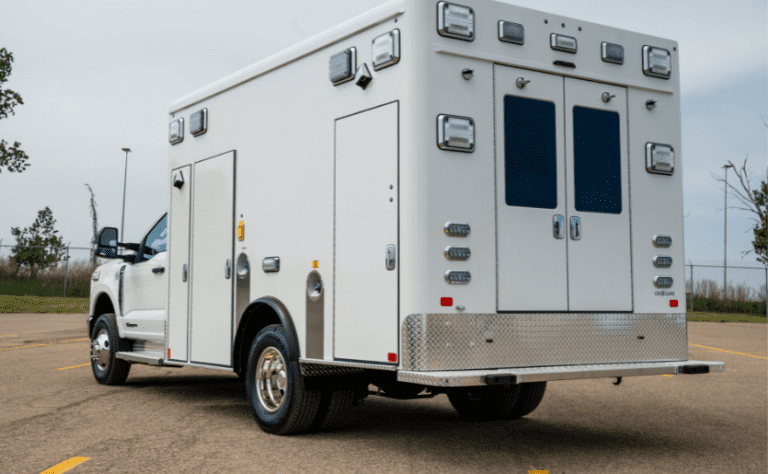
Rugged enough for gravel roads, comfortable enough for long shifts, and dependable when every second counts, the Type 1 ambulance is built to handle whatever Canadian EMS throws its way. Type 1 ambulances are a valuable addition to Canadian EMS fleets, with their layout and versatility playing a key role depending on the mission at hand.
An option that is versatile and adaptable for specialized missions
A Type 1 ambulance is a platform that provides operational flexibility. Built on a truck chassis with a higher payload capacity, it can support specialized missions that require additional space, equipment, and adaptability. Unlike Type 3 ambulances, Type 1 models are equipped with 4×4 capability, giving crews better traction and confidence when responding on gravel roads, in snow, or in remote areas.
For services supporting neonatal transport, critical care transfers, or other advanced operations, interior space becomes a critical factor.
A Type 1 ambulance provides the capacity needed to integrate additional medical equipment and supplies while maintaining safety and vehicle performance. This ensures paramedics have immediate access to essential tools, securely mounted and positioned to support efficient patient care.
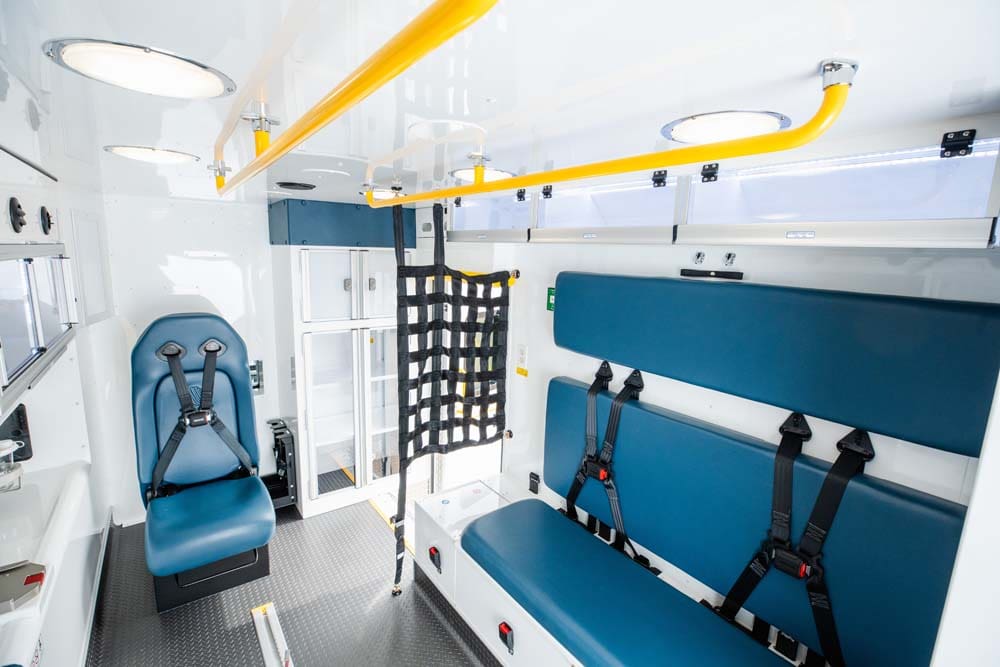
There are several layout options available depending on your service’s needs. The module can be configured with a centre-mount cot and a CPR seat on the street side. The result is a workspace that feels intuitive for paramedics, supports smooth movement inside the module, and improves access to the patient during care and transport.
Safety standards and certification in Canada
There is no question that when it comes to selecting a vehicle for life-saving missions, safety is the number one priority. In Canada, Type 1 ambulances are designed to meet well-established standards such as Ontario MOH requirements and Quebec BNQ specifications.
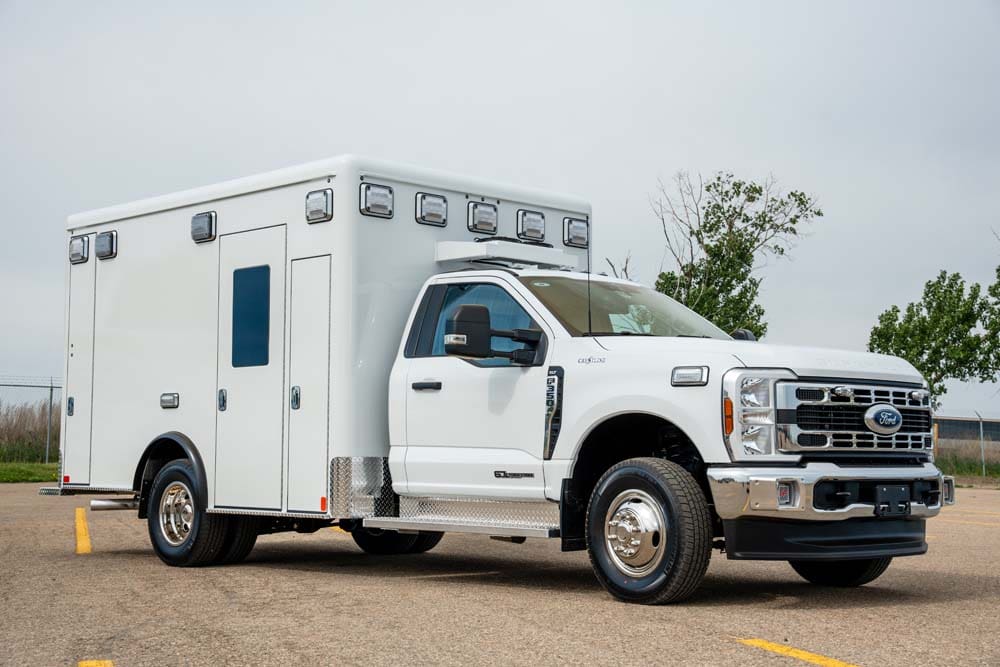
Safety requirements continue to evolve across the industry. While Canadian standards remain comprehensive, they are increasingly informed by advanced testing methods such as dynamic crash testing. These evaluations measure how key components like seating, stretchers, oxygen systems, and cabinetry perform during high-impact scenarios.
For EMS services, this means today’s Type 1 ambulances are engineered to meet current Canadian requirements while also integrating evolving safety practices. The result is a more secure and reliable environment for both paramedics and patients.
Operational value and long-term cost efficiency
From a total cost of ownership perspective, the Type 1 ambulance remains competitive with other platforms. It offers strong long-term value, especially for services looking at remount opportunities and extended vehicle lifecycles.
As a heavier-duty ambulance than its Type 3 counterpart, it is a reliable option that can help reduce maintenance over time. Adding a Type 1 to your fleet also brings operational variety. Instead of relying on a single platform for every call, you gain access to different vehicle types based on the specific requirements of each mission. This approach supports smarter deployment decisions while protecting your long term investment.
Inside the CCL 150 Type 1 ambulance
Crestline’s Type 1 ambulance is built with practicality in mind. The strength of the truck chassis, combined with a well-organized module, creates a workspace that supports paramedics in delivering efficient patient care.
Inside the patient compartment, every element is designed to support paramedics in motion. Four-point harness seating helps keep crew members secure while delivering care, and anti-slip flooring improves stability during transport, even in challenging road conditions. Overhead and under-counter storage keep equipment organized and within reach, allowing crews to stay focused on the patient.
For Canadian EMS services working across different environments and call types, versatility is key. A Type 1 ambulance gives you the flexibility to handle specialized missions, adjust layouts, and carry the equipment your teams need. Every call comes with its own requirements, whether it’s distance, crew size, or level of care, so having the right vehicle for each situation can make a real difference for paramedics. Crestline offers a full range of vehicles to support this approach, with a solution for every mission.
The Type 1 earns its place in your fleet for the calls that require more capacity, more layout flexibility, and support for more complex missions.
Ready to add a type 1 ambulance to your fleet?